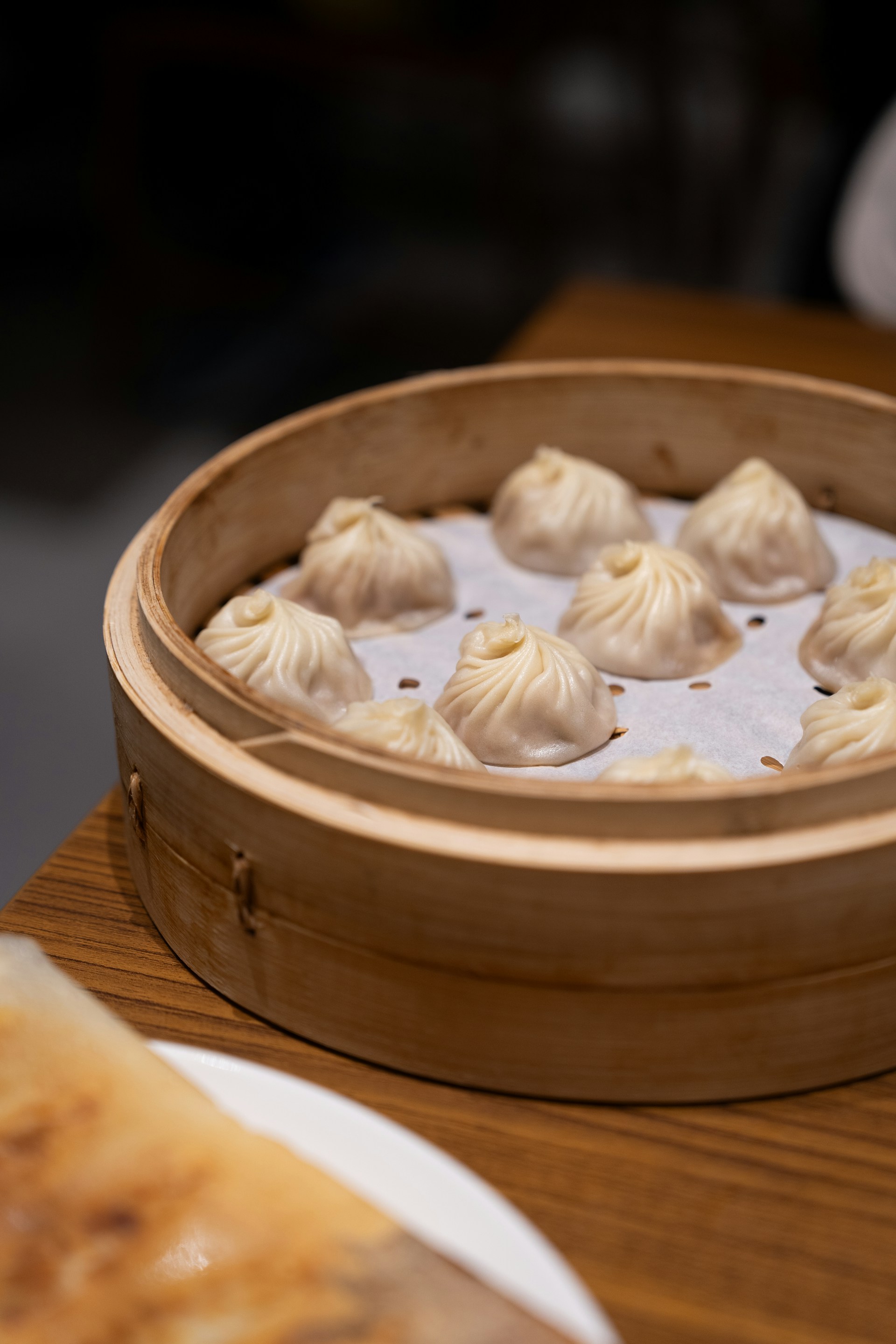
A journey through the restaurants that survived generations—and continue to serve food today.
There are many ways to experience Philippine history.
You can walk through an old church, visit a historic house, study photographs in an archive, or explore the ruins of a forgotten building.
Or you can sit down at a table, order a bowl of noodles, and take a bite.
Across Manila are restaurants that have been serving food for generations. Some have survived wars. Others have witnessed the transformation of Manila from horse-drawn streets to modern highways. Their menus have changed little, while the world around them changed almost beyond recognition.
These restaurants are not preserved behind glass. They are still working restaurants.
People still walk through their doors, sit at their tables, order their favorite dishes, and go home with the same familiar flavors that earlier generations knew.
For this Legacy Bites feature, we looked at five historic restaurants that continue to welcome diners today, beginning with the youngest of the five and traveling backward through time.
1. The Aristocrat — Established 1936
The Aristocrat Restaurant | 432 San Andres Street cor Roxas Blvd, Malate, Manila
When Filipinos talk about restaurants that have become part of Manila’s collective memory, The Aristocrat is difficult to leave out.
The story began in July 1936, when Engracia “Aling Asiang” Cruz-Reyes and her husband, Alex Reyes, opened a restaurant after earlier experimenting with mobile food vending.
According to the National Historical Commission of the Philippines, the business began with an old vehicle used by Aling Asiang as a traveling merienda stand around Luneta and nearby areas. A restaurant followed, initially associated with the name The Admiral Dewey, before becoming The Aristocrat in 1939. The NHCP officially recognizes the restaurant with a Level II historical marker.
What makes The Aristocrat particularly interesting is that its beginnings were not built around luxury dining.
Aling Asiang’s idea was practical: create Filipino food that was flavorful, accessible, and easy to eat.
That spirit eventually became one of the restaurant’s greatest strengths. Its signature chicken barbecue, served with Java rice, sauce, and atchara, became one of the dishes most closely associated with the restaurant. Other Filipino favorites helped turn The Aristocrat into a household name.
And perhaps that is why the restaurant has lasted so long.
The Aristocrat did not simply preserve an old menu. It became part of everyday Filipino life. Birthdays were celebrated there. Families met there. Friends gathered there. Late-night meals became traditions.
Nearly nine decades later, the restaurant continues to operate at its historic Malate location at 432 San Andres Street.
Why it matters
The Aristocrat represents a different chapter in Philippine restaurant history from the older Chinese-Filipino panciterias.
It is a story of Filipino entrepreneurship and the development of recognizable Filipino restaurant cuisine in the 20th century.
It also reminds us that culinary heritage does not have to be centuries old to become deeply woven into national memory.
When you visit: The chicken barbecue with Java rice remains the obvious place to begin.
2. Masuki — Established 1930
Masuki Mami House | 931 Benavidez Street, Binondo, Manila
From Malate, our journey moves to Binondo.
And here, the story becomes deeply connected to the history of Chinese-Filipino food.
Masuki has been associated with Binondo since 1930, when the neighborhood was already at the heart of Manila’s Chinese commercial community.
Today, its Benavidez Street branch remains one of the places where diners can experience the classic combination of mami, siopao, siomai, and the restaurant’s famous brown sauce. Its listed address is 931 Benavidez Street, Binondo.
Masuki’s importance is not simply that it is old. It belongs to the story of how Chinese culinary traditions became part of everyday Filipino food culture.
Mami is now so familiar that it can be easy to forget that it represents generations of cultural exchange.
Chinese immigrants brought cooking techniques, noodles, dumplings, sauces, and other traditions to Manila. Over time, these foods were adapted to local tastes and became part of the Filipino-Chinese culinary tradition we know today.
Binondo was central to that process.
Established in 1594, Binondo is widely recognized as the world’s oldest Chinatown and has long been a center of Chinese-Filipino cultural and commercial exchange.
Masuki’s enduring popularity is therefore part of a much larger story.
A bowl of mami may look simple.
But behind that bowl is a history of migration, adaptation, entrepreneurship, and generations of Filipino diners who made Chinese-influenced food their own.
The brown sauce
One of Masuki’s recognizable features is its accompanying brown sauce, which diners can add to their mami, siopao, or other dishes.
It is a small detail, but these are often the details that make an old restaurant memorable.
Recipes may be difficult to document precisely across generations. Flavors, however, can become part of family memory.
And sometimes, that memory is stronger than a written recipe.
When you visit: The historic Benavidez Street location remains the best place to experience Masuki in its Binondo setting.
Try: Classic mami, siopao, and the signature brown sauce.
3. Ramon Lee Panciteria — Established 1929
Ramon Lee’s Panciteria | 540 Ronquillo Street, Santa Cruz, Manila
One year older than Masuki is another Manila institution: Ramon Lee Panciteria.
Established in 1929, the restaurant is located on Ronquillo Street in Santa Cruz, an area that once formed part of the bustling commercial heart of old Manila. Its address today is 540 Ronquillo Street, Santa Cruz, Manila.
The restaurant was named after its founder, Ramon Lee, a Chinese immigrant who arrived in Manila in the 1920s. Over time, the panciteria became known for straightforward Chinese-Filipino dishes that appealed to generations of Manila diners.
Among its best-known dishes are pancit canton and its fried chicken, with other traditional dishes making up a menu designed more for sharing than for culinary theatrics.
And that is part of Ramon Lee’s charm. There is no need for elaborate presentation.
This is the kind of restaurant where food does the talking. Pancit is placed in the middle of the table. Someone orders chicken. Another person adds another dish. And before long, everyone is sharing. That style of dining is itself part of the heritage.
Restaurants like Ramon Lee helped establish the Filipino-Chinese panciteria as a familiar part of urban Filipino life—places where affordability, generous portions, familiar flavors, and communal dining mattered more than fashionable presentation.
A restaurant in the old downtown
Ramon Lee’s location is significant.
Before Manila’s commercial center shifted toward newer business districts, areas around Santa Cruz, Quiapo, Escolta, and Binondo formed a dense network of shops, theaters, markets, churches, offices, and restaurants.
For generations of Manileños, going “downtown” meant entering this world.
Ramon Lee survived that transformation.
And today, walking into the restaurant offers a glimpse of a very different Manila—one that still exists in fragments throughout the older districts of the city.
Try: Pancit canton and Ramon Lee’s famous fried chicken.
4. Ma Mon Luk — Established 1920
Ma Mon Luk | 408 Quezon Avenue, Quezon City
If Masuki represents the continuing tradition of the Binondo mami house, Ma Mon Luk represents one of the most famous personalities in the history of Filipino noodle culture.
Ma Mon Luk arrived in the Philippines in the early 20th century and began selling noodle soup as an itinerant vendor.
The restaurant’s own historical account places his arrival in 1920, when he arrived without money or employment and eventually began selling chicken noodle soup around Binondo. His customers included students looking for an inexpensive and filling meal.
From those humble beginnings, Ma Mon Luk built a restaurant empire around mami and siopao. His name eventually became almost synonymous with mami itself.
But there is an important distinction worth making.
Did Ma Mon Luk invent mami?
The popular story says that he did.
Ma Mon Luk himself promoted the idea that “mami” came from his own name—essentially “Ma’s noodles.”
However, historians and linguistic research suggest a more complicated story.
Noodle dishes similar to mami were already part of Chinese and Filipino-Chinese culinary traditions before Ma Mon Luk became famous. Linguistic research has also connected the word mami to Philippine Hokkien rather than simply to Ma Mon Luk’s name.
So perhaps the more accurate way to describe his contribution is this: Ma Mon Luk may not have invented mami, but he helped transform it into one of the Philippines’ most recognizable comfort foods.
That distinction makes his story even more interesting. He took a food tradition, developed his own version, popularized it on Manila’s streets, and eventually turned it into a restaurant tradition that survived him.
From street vendor to institution
Ma Mon Luk’s early method was remarkably simple.
He carried his food in containers suspended from a bamboo pole, much like a traditional street vendor. His noodle soup and chicken were served to customers along the streets of Manila.
Eventually, he established restaurants.
The business moved through several locations before settling at 545 Quezon Boulevard in Quiapo in 1950. The Quiapo location later became one of Manila’s most recognizable old-school eating places.
Today, the restaurant’s official website lists its Quezon City branch at 408 Quezon Avenue, while the former Quiapo location is no longer operating.
That makes the Quezon Avenue branch particularly important for anyone interested in experiencing the Ma Mon Luk tradition today.
When you visit: Current listed address: 408 Quezon Avenue, Quezon City.
Try: The original mami and siopao. And when you take that first spoonful of broth, remember that this humble bowl helped define an entire category of Filipino comfort food.
5. To Ho Panciteria Antigua — 1888
To Ho Panciteria Antigua | 422–424 Tomas Pinpin Street, Binondo, Manila
And then we reach the oldest—and the most complicated—story on our list.
To Ho Panciteria Antigua is commonly identified as having been established in 1888. Its current address is 422–424 Tomas Pinpin Street in Binondo, where it continues to serve Chinese-Filipino dishes including pancit and other traditional favorites.
That alone would make it extraordinary.
But the history becomes even more fascinating when we look more closely at the date.
1888—or earlier?
The restaurant itself has long used 1888 as its founding date, and this is the date widely associated with To Ho today. However, food historian Felice Santa Maria, in The Governor-General’s Kitchen: Philippine Culinary Vignettes and Period Recipes, 1521–1935, traced the establishment known as Antigua to 1866, when it was reportedly established by Manuel “Po Kong” Bautista.
Because the early documentation is incomplete, the precise relationship between the earlier Antigua establishment and the restaurant now known as To Ho is not completely settled.
For that reason, it is safer to say: To Ho is one of the oldest continuously operating restaurant traditions in the Philippines, commonly dated to 1888, with historical sources suggesting an even earlier connection to an establishment called Antigua.
That may sound less dramatic than simply declaring “the oldest restaurant in the Philippines.”
But history is often more interesting when we acknowledge what we know—and what remains uncertain.
A restaurant shaped by Binondo
To understand To Ho, you have to understand Binondo.
For centuries, this district has been one of the most important centers of Chinese-Filipino life in Manila.
Its food culture developed through the meeting of Chinese culinary traditions and local Filipino tastes. Pancit became Filipino. Lumpia became Filipino. Siopao became Filipino. And restaurants like To Ho became part of the everyday landscape.
Today, To Ho continues serving dishes associated with this tradition, including pancit, lechon Macau, asado, and lumpia. But perhaps its greatest legacy is not any single dish. It is continuity.
Think about what 1888 meant. The Philippines was still a Spanish colony. The Philippine Revolution had not yet begun. José Rizal was still alive. There were no airplanes, televisions, smartphones, or social media. And somewhere in Binondo, a panciteria was already feeding customers.
More than a century later, people are still doing exactly that.
The Rizal connection
There are longstanding accounts that José Rizal and Philippine presidents have dined at the establishment. However, because some of the early historical documentation surrounding To Ho is incomplete, these claims are best treated as part of the restaurant’s long-standing historical tradition rather than presented as independently documented fact without qualification.
That distinction matters when writing about heritage.
The goal is not to make a story sound older than it is.
The goal is to tell the story accurately enough that it remains meaningful.
When you visit: 422–424 Tomas Pinpin Street, Binondo, Manila.
Try: Pancit canton, miki bihon, lumpia, asado, and other Filipino-Chinese classics. And give yourself time to explore Binondo before or after the meal. Because with To Ho, the restaurant is only one part of the story. The streets around it are part of the heritage too.
Why These Restaurants Matter
It is tempting to think of an old restaurant simply as a place with an old menu. But age alone does not create heritage. What makes these restaurants remarkable is continuity.
The Aristocrat survived because generations of Filipinos continued to choose it for family meals. Masuki kept serving mami while the neighborhood around it changed. Ramon Lee remained a panciteria in a city that increasingly moved toward modern restaurant concepts. Ma Mon Luk turned a humble noodle soup into a lasting part of Filipino food culture. And To Ho survived across an extraordinary span of Philippine history.
Together, these restaurants represent more than five centuries of combined years of restaurant history when their current ages are added together.
But perhaps the more meaningful number is not the years. It is the generations.
Imagine how many people have sat at these tables. A child eating mami with a parent. A couple sharing pancit. A group of friends meeting after school. A family celebrating a birthday. A traveler discovering an old Manila restaurant for the first time.
The people change. The city changes. The recipes may evolve slightly. But the simple act of gathering around food remains.
A Note About Calling Them the “Oldest”
There is no single official national ranking that definitively establishes these five restaurants as the five oldest continuously operating restaurants in the Philippines.
Founding dates can be difficult to verify, particularly for restaurants established in the 19th and early 20th centuries. Businesses can also move locations, close temporarily, change ownership, or evolve from an earlier food business into the restaurant known today.
That is especially relevant to To Ho, whose commonly cited 1888 date has historical complications.
So this list is best understood as five of the Philippines’ oldest surviving restaurant institutions that you can still visit today, rather than an absolute government-certified ranking.
And perhaps that makes the journey even more worthwhile. Because heritage is not always a neat timeline.
Sometimes, it is a story pieced together from restaurant signs, family memories, historical records, old photographs, newspaper accounts, and the food still being served today.
Plan Your Own Culinary Time Travel
If you want to experience these restaurants yourself, you don’t need a museum ticket.
You can simply make a reservation—or, depending on the restaurant, walk in. You can travel from Malate to Santa Cruz, Quezon City, and Binondo. You can order the chicken barbecue at The Aristocrat. Have mami at Masuki. Share pancit and fried chicken at Ramon Lee. Try the mami and siopao at Ma Mon Luk. Then finish your journey in Binondo at To Ho Panciteria Antigua.
Five restaurants. Five different stories. And more than a century of Philippine culinary history between them.
The most remarkable thing is that these stories are not finished. They are still being written every time another customer walks through the door.
Have You Been to Any of These Restaurants?
Heritage survives when people continue to use it, visit it, talk about it, and pass it on.
So we’d love to hear from you.
Which of these historic restaurants have you visited?
Which one is your favorite?
And do you know another restaurant in the Philippines that has been serving generations of diners and deserves to be included in a future Legacy Bites feature?
Tell us in the comments.
And if you enjoyed this journey through Philippine culinary history, explore more of Happy Rabbit’s Legacy Bites stories—where we discover the places, food, and traditions that continue to connect us with the past.
Happy Rabbit — Reliving the past in modern times.
Feature Image: Photo by Harrison Chang on Unsplash
Leave a Reply